
NETGEAR 10 Gig Routers
WiFi 7 routers and Orbi mesh with 10 Gigabit Ethernet internet and LAN ports, built to use every gigabit of today's fastest cable and fiber plans.
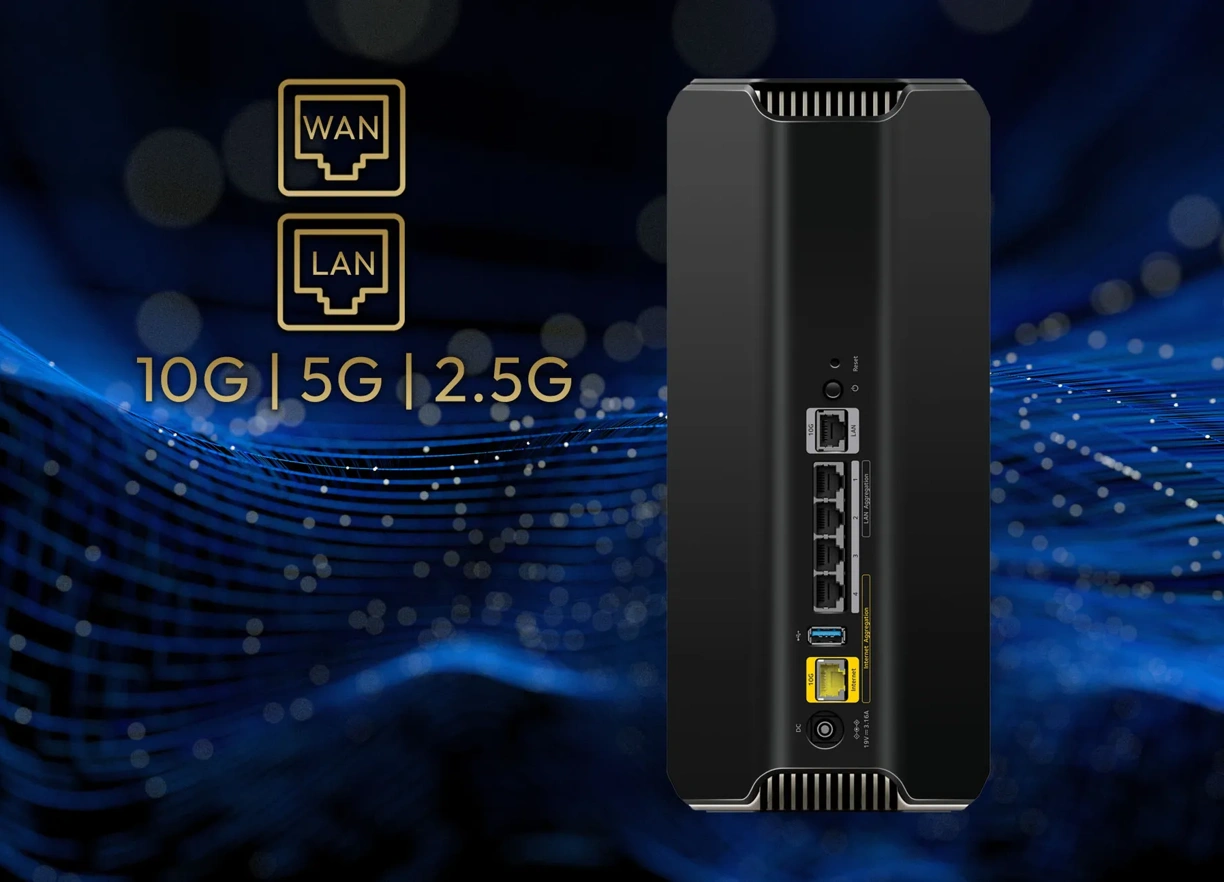
True 10 Gig internet
A 10 Gigabit Ethernet WAN port connects to your modem and removes the bottleneck to your fastest plan.
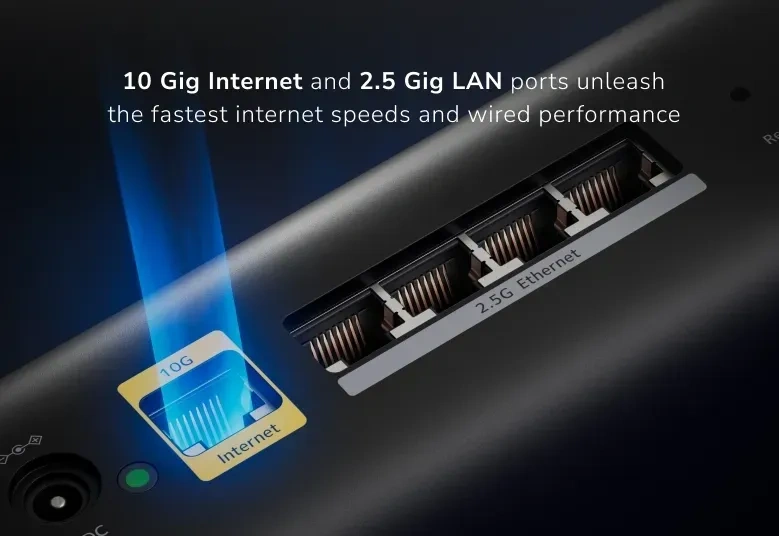
10 Gig wired LAN
A 10 Gig LAN port gives wired gear like gaming PCs and NAS drives the full bandwidth they're built for.
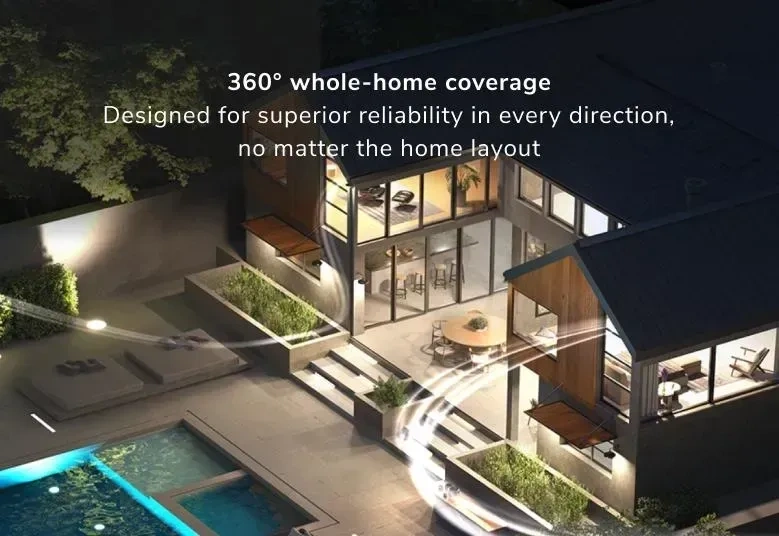
WiFi 7 speed up to 27 Gbps
WiFi 7 with Multi-Link Operation delivers higher throughput and lower latency, up to 27 Gbps on the Orbi 970.
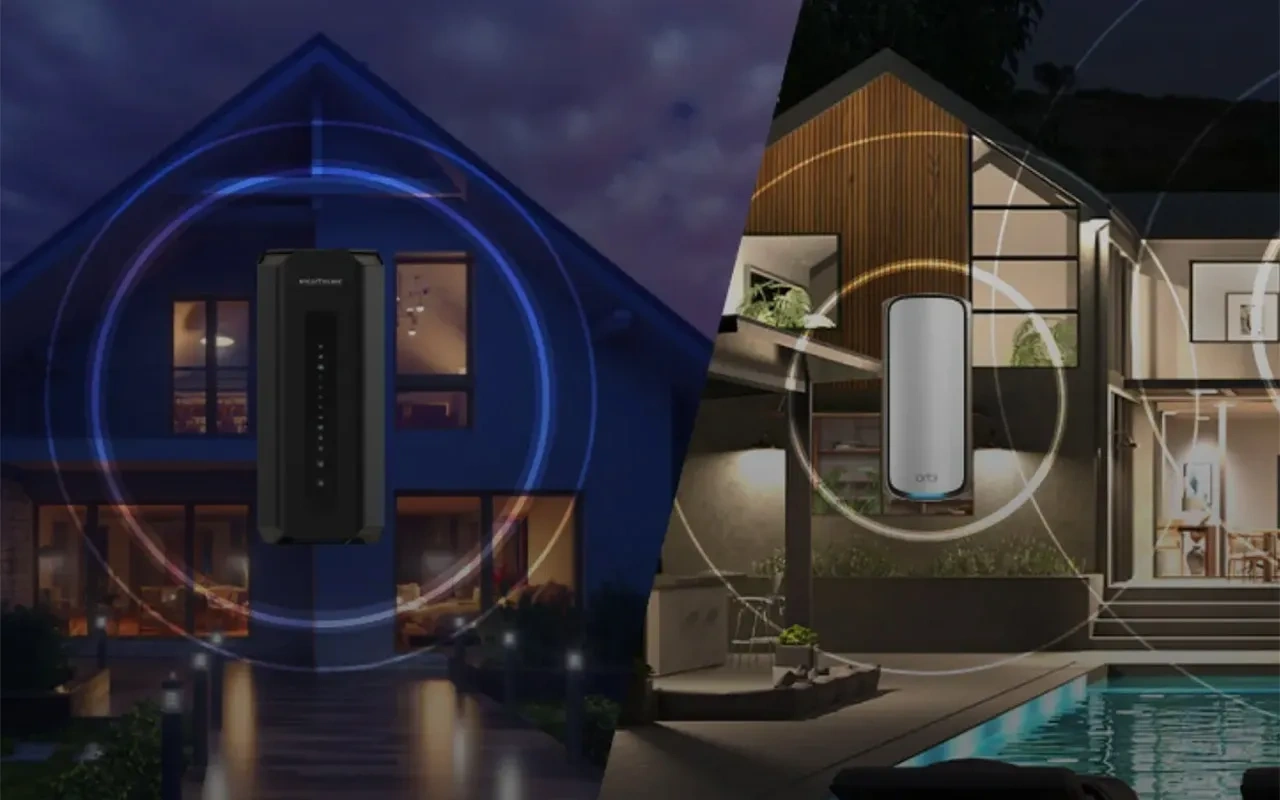
Standalone or mesh
Choose a Nighthawk router for focused, high-performance coverage, or an Orbi mesh system for seamless whole-home WiFi.
What is a 10 Gig router, and do you need one?
The A 10 Gig router has 10 Gigabit Ethernet (10GbE) LAN ports and a 10G WAN port, removing the bottleneck between your internet plan and your devices so you get the full speed you pay for - with WiFi 7 speeds up to 27 Gbps. Not ready for 10 Gig? Even an upgrade to multi-gig routers delivers a significant performance boost at a lower price.
Shop 10 Gig Routers:
4 Items
Sort By


4.6
(875)
RBE973
Orbi 970 Series Quad-band WiFi 7 Mesh, Black Edition (1 Router + 2 Satellites)
WiFi 7 technology up to 27Gbps Quad-band WiFi

4.6
(875)
RBE973
Orbi 970 Series Quad-band WiFi 7 Mesh (1 Router + 2 Satellites)
WiFi 7 technology up to 27Gbps Quad-band WiFi

Showing 1-4 of 4
10-Gig Router FAQs
A 10 Gig router has a 10 Gigabit Ethernet (10GbE) WAN port that connects to your modem, so the router can pass through the full speed of a multi-gig internet plan instead of capping it at 1 Gbps. NETGEAR's WiFi 7 routers and Orbi mesh systems pair a 10 Gig internet port with a 10 Gig LAN port and WiFi 7, so both wired and wireless devices can use the bandwidth you pay for. Some people search for a "10gb router," which refers to the same 10 Gigabit per second connection.
No. A 10 Gig router improves any connection by removing the wired bottleneck, adding capacity for many simultaneous devices, and speeding up local transfers between your own devices over 10 Gig LAN. It also future-proofs your home as faster cable and fiber plans expand. You get the fullest benefit when your plan is also multi-gig.
The WAN port connects your router to your modem and carries your internet plan into the network. LAN ports connect wired devices like PCs, consoles, and NAS drives. The Nighthawk RS700S and RS600 and the Orbi 970 include both a 10 Gig WAN port and a 10 Gig LAN port, so the full path from your modem to your wired devices runs at 10 Gig.
Choose a Nighthawk standalone router, like the RS700S or RS600, for focused performance in small to mid-size homes with fewer walls. Choose an Orbi mesh system, like the 970, for whole-home coverage in larger or multi-floor homes, where satellites extend WiFi without dead zones. Both deliver WiFi 7 and a 10 Gig internet port.
For cable internet, yes. Your router connects to a modem, and reaching multi-gig speeds requires a multi-gig modem. The Nighthawk CM3000 is a mid/high-split DOCSIS 3.1 cable modem with a 2.5 Gig Ethernet port, delivering download speeds up to 2.5 Gbps and uploads up to 1 Gbps — and it's certified for Xfinity, Spectrum, Cox, and more. Plug your router's multi-gig internet port directly into the modem's 2.5 Gig port, and the whole chain runs at speed. (Not compatible with Xfinity Voice or fiber service.) For fiber internet, your provider's optical terminal acts as the modem — connect the router's 10 Gig WAN port to it.
For most home runs, a CAT 6 cable handles 10 Gig speeds, and CAT 6A or higher is a safe choice for longer runs. The cable connects your modem to the router's 10 Gig WAN port and your devices to the 10 Gig LAN port, so the wired path can carry the full speed your WiFi 7 system supports.