IN THIS ARTICLE
- How to Choose the Right NETGEAR Router for Your Home
- NETGEAR Router Options Based on Your WiFi Needs
- Nighthawk vs Orbi: Which NETGEAR Router Is Right for You?
- How Home Size Affects Your Router Choice
- Understanding WiFi Technology When Choosing a Router
- When Should You Upgrade Your Router?
- Best NETGEAR Router Recommendations
- Frequently Asked Questions About Starlink Routers
How to Choose the Right NETGEAR Router for Your Home
For determining the best possible hardware, it is vital to analyze the key selection criteria for wireless efficiency:
- Home size and coverage requirements: Measure your total square footage and identify areas where your current signal drops.
- Number of connected devices: Count all active electronics, including smartphones, laptops, smart TVs, and IoT gadgets.
- Internet speed and ISP plan: Ensure the router you select can actually handle the maximum bandwidth you pay for each month.
- Gaming, streaming, remote work, and smart home needs: High-speed applications demand special traffic management.
- WiFi technology requirements: Evaluate whether you require an ordinary connection or the very newest wireless technology.
NETGEAR Router Options Based on Your WiFi Needs
Categorizing routers according to your daily activity pattern rather than just technical requirements can make it easier to choose from them:
- Best NETGEAR router for everyday home use: Good for browsing, sending emails, and streaming.
- Best NETGEAR router for gaming: Designed to minimize lag, lower latency, and prioritize competitive gaming traffic.
- Best NETGEAR router for streaming and multiple devices: Built with the processing power to handle simultaneous 4K streams without buffering.
- Best NETGEAR router for large homes: Engineered to push strong signals through multiple floors and expansive architectural layouts.
- Best NETGEAR router for advanced users: Offers robust customization features and deep network management tools.
Nighthawk vs Orbi: Which NETGEAR Router Is Right for You?
Nighthawk Router Use Cases
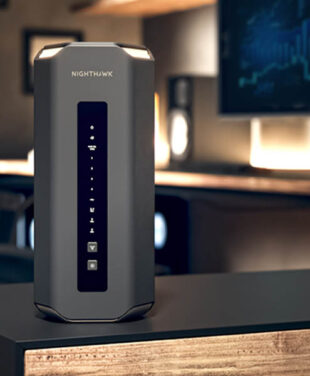
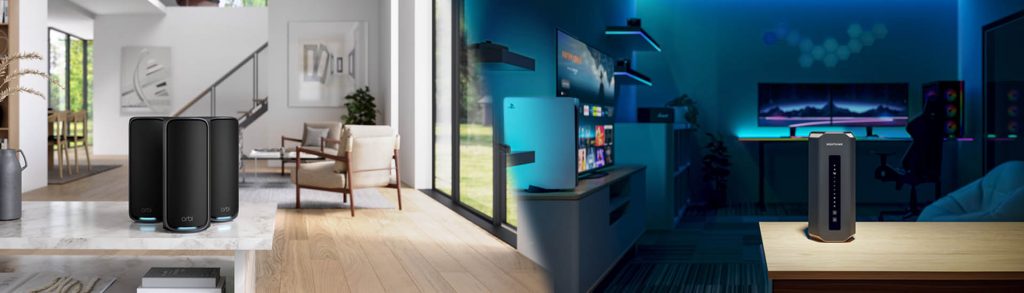
Nighthawk models are high-performance traditional routers that excel at delivering maximum speed and low latency from a central location. They are generally the best choice for dedicated gamers and heavy streamers living in apartments or average-sized homes.
Orbi Mesh WiFi System Use Cases
The Orbi system is engineered to eliminate dead spots by implementing a main router along with several satellite nodes that ensure complete coverage of the property.
When Users Need a Traditional Router vs Mesh Networking
In case your house has an open floor plan and you are able to place your router in the center of the house, then go with the Nighthawk regular router. But use the Orbi mesh system when you find it difficult to cover bedrooms and outdoor areas of your house.
Coverage and Scalability Differences
Mesh systems are extremely scalable in that you can add additional satellite nodes when you shift to a larger house. On the other hand, the coverage area of regular routers is fixed due to internal antennas.
How Home Size Affects Your Router Choice
The size and structure of your home play an essential role in the choice of the right router. The thing is that all routers broadcast their signals from one point only, and thus the further the distance to the room and the higher the number of walls and floors to pass through, the worse the connection is. Mesh systems overcome the problem by installing satellites all around the house, ensuring even coverage everywhere.
One should remember the following principle: buy a router or a mesh system with a maximum capacity at least twice that of the area of your house. Such an additional margin will compensate for walls, furniture, and other interference, as well as provide equal speed of data exchange regardless of the location inside your home.
| Home Size | Standalone Router (Nighthawk) | Mesh System (Orbi) |
|---|---|---|
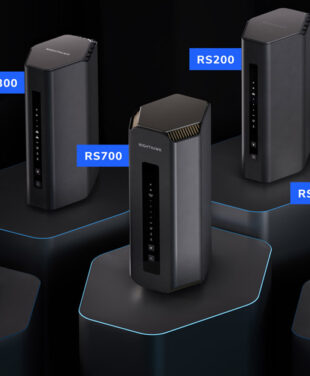
| Up to 2,000 sq. ft. | Nighthawk RS300: speeds up to 6 Gbps, suited to 20–30 devices | Orbi 770 Series 2-pack: speeds up to 11 Gbps, covers up to 5,500 sq. ft. |
| Up to 2,500 sq. ft. | Nighthawk RS500: speeds up to 12 Gbps, suited to 30–50 devices | Orbi 770 Series 3-pack: covers up to 8,000 sq. ft. |
| Up to 3,000 sq. ft. | Nighthawk RS700S: speeds up to 19 Gbps, supports 200+ devices | Orbi 870 Series 2-pack: speeds up to 21 Gbps, covers up to 6,000 sq. ft. |
| Up to 3,500 sq. ft. | Nighthawk RS700S: covers up to 3,500 sq. ft. | Orbi 870 Series 3-pack: covers up to 9,000 sq. ft. |
| 4,000 sq. ft. and up | A mesh system is recommended, since this is beyond what one router handles well | Orbi 970 Series 3-pack: speeds up to 27 Gbps, covers up to 10,000 sq. ft., with add-on satellites for about 3,300 sq. ft. more each |
Apartments and Smaller Homes
For apartments and small homes that have less than 2,000 sq. ft., the installation of one WiFi 7 router can do the trick. The Nighthawk RS300 is one of the best options to consider because it meets all the requirements of an average family. In crowded places such as apartment complexes, NETGEAR Armor technology provides an additional security layer.
Larger and Multi-Story Homes
Once a home passes about 3,000 sq. ft. or spreads across several floors, a single router has trouble reaching every room. A Nighthawk RS700S can cover up to 3,500 sq. ft., but at around 4,000 sq. ft. it is being pushed to its limit. For these homes, an Orbi mesh system is the better choice. The Orbi 870 and 970 Series place satellites on each floor, so devices stay connected as you move around. You can add more satellites later if you expand or move to a bigger home.
Homes with Thick Walls
Brick, concrete, plaster, and stone block WiFi signals much more than standard drywall. If rooms behind thick walls keep losing connection, a mesh system lets you place a satellite on the far side of the obstruction instead of trying to push one signal through it. Learn more in our guide to mesh WiFi for homes with thick walls.
Extending WiFi to Outdoor Spaces
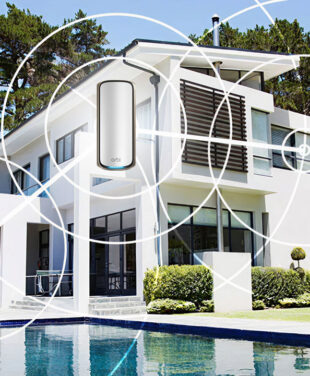
If you are looking for WiFi in a patio area, backyard, poolside, or even your detached garage, you will need more coverage area than just what your square footage requires indoors. Mesh WiFi is better for this purpose since satellite access points can be located nearer to the outdoor area. See our guide to outdoor mesh WiFi for setup options.
Understanding WiFi Technology When Choosing a Router
- WiFi 7 benefits: The newest wireless standard offers unprecedented speeds, massive network capacity, and significantly reduced interference. Check out the Nighthawk WiFi 7 router guide to see top WiFi 7 router options, or look into affordable WiFi 7 routers if you need budget WiFi 7 options.
- WiFi 6 and WiFi 6E considerations: These previous generations remain highly reliable and cost-effective choices for homes with moderate device counts.
- Speed ratings: A higher speed rating on a router box ensures your local network can transfer data rapidly between local devices.
- Future-proofing your home network: Investing in modern standards ensures your network is ready to support new devices over the next several years.
When Should You Upgrade Your Router?
Knowing when to replace your router involves watching for a few key performance signals. You should plan to upgrade your router if you experience any of the following:
- Older router technology: The wireless technology in use by your router is now outdated.
- Poor coverage: You are dealing with persistent dead zones in important rooms.
- Slow performance: Your devices regularly have to buffer or disconnect from the internet.
- Increasing connected devices: You have added more smart home hardware than your current processor can manage.
Best NETGEAR Router Recommendations
| Router | Best For | Coverage | WiFi Technology | Key Benefits |
|---|---|---|---|---|
| Nighthawk High-Performance | Gaming and heavy streaming | Small to medium homes | WiFi 6E / WiFi 7 | Advanced prioritization and ultra-low latency |
| Orbi Premium Mesh | Whole-home seamless coverage | Large homes and multi-story | WiFi 6 / WiFi 7 | Eliminates dead zones with scalable nodes |
| Nighthawk Everyday | Standard browsing and remote work | Apartments and small homes | WiFi 6 | Reliable daily performance at a great value |

Frequently Asked Questions About Starlink Routers
Which NETGEAR router should I buy?
The right model depends on your environment, but a Nighthawk is best for raw speed in a centralized space, while an Orbi is best for spreading coverage across a large house.
What is the best NETGEAR router for my home?
Your best choice depends on your particular square footage, the speed of your internet service plan, and the number of devices that require connection at the same time.
Is Nighthawk better than Orbi?
They aren’t better than each other because they have their own roles. If you require maximum speeds, get Nighthawk, and if you want great coverage, get Orbi.
What NETGEAR router is best for gaming?
Nighthawk routers are generally the best choice for gaming due to their specialized software, fast processors, and robust tools for minimizing latency.
Do I need a mesh WiFi system or router?
You need a traditional router if your space is small enough for one access point to cover easily. You need a mesh system if your home has multiple floors, thick walls, or persistent dead zones.
What size router do I need for my home?
It is recommended to buy a router or a mesh system that is capable of covering approximately twice the size of your house. For houses up to 2,500 sq. ft., a Nighthawk WiFi 7 router will serve as a good choice. For houses greater than 3,000 sq. ft. or multi-level houses, the Orbi mesh system will be suitable.