IN THIS ARTICLE
Extender vs Mesh Video
See a summary of our Extender vs Mesh in the short video below:
When A Router is Not Enough...
According to PEW Research Center report, 93% of American adults use the internet. And the best way to ensure everyone is connected is by installing a WiFi network at home.
A good WiFi signal is essential whether you’re streaming movies, browsing the web, or playing games online. But what do you do if your signal is weak or spotty? You could try a WiFi extender or upgrade to a Mesh WiFi system. If you’re like the ordinary consumer, you don’t know much about either or which will serve you best.
In this article, you’ll find a comprehensive comparison between mesh WiFi vs. WiFi extenders and help you decide which one is right for you.
 |
WiFi Extender and Mesh WiFi System Comparison Table
| Feature | WiFi Extender | Mesh WiFi System |
| Network Name (SSID) | Rebroadcasts under a new network name (e.g., Home_EXT) | Single unified network name throughout the house |
| Roaming | Manual network switching required as you move | Seamless automatic hand-off between nodes |
| Bandwidth & Speed | Halves available bandwidth on basic dual-band models | Preserves maximum speeds via dedicated backhaul |
| Tech Standard Support | Up to WiFi 6 | Full support for WiFi 6E and WiFi 7 (Multi-Link Operation) |
| Ideal Property Size | Small/Medium homes needing coverage in 1–2 specific rooms | Medium to Large homes (3,000+ sq ft) or complex layouts |
What is Mesh WiFi?
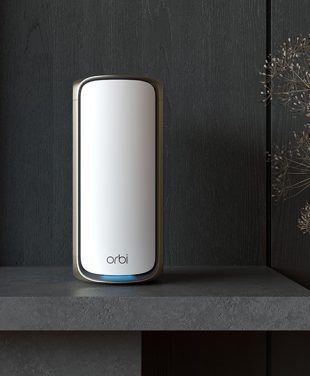
Mesh WiFi systems uses multiple devices around your home to create one seamless network. Each of these is called a ‘node’ and they all work together to extend your WiFi signal to your whole home. One node usually connects to your home router via Ethernet cable, and the rest of the nodes are placed around your home to where you need WiFi. You don’t have to manually switch to another network, the nodes automatically keep you connected to whichever node has the strongest signal, giving you seamless coverage everywhere.
Modern mesh systems like NETGEAR Orbi use Tri-Band or Quad-Band designs with specific backhaul channels. The integration of WiFi 6E and WiFi 7 with Multi-Link Operation (MLO) capabilities allows the mesh nodes to transmit data from your devices to the modem at multi-gigabit speeds without using the bandwidth of your phone and laptop networks.
Mesh WiFi networks are very easy to set up, and are good for:
- Extending your WiFi to your whole home or bigger offices.
- Moving around at home and always staying connected to your Wi-Fi.
- Removing all signal dead zones.
- Getting the fastest WiFi speeds in large spaces.


As you can see, the difference between the two is that Wi-Fi extenders are used to rebroadcast your home router’s Wi-Fi signal. The main drawback is that your devices will not switch between Wi-Fi broadcasts automatically and you experience a disconnection while switching manually.
Mesh Wi-Fi uses multiple nodes to create a single, big and seamless Wi-Fi network that covers your whole home. Your devices will connect to the closest node automatically and without any disruptions as you move around your house.

What is a WiFi Extender?
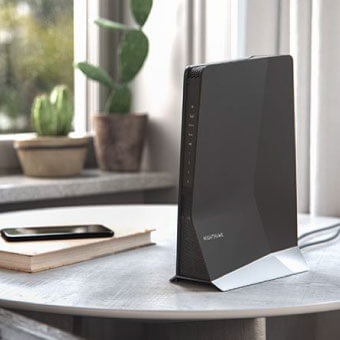
A Wi-Fi extender is one simple device that extends your Wi-Fi signal by rebroadcasting it further into your home. Wi-Fi extenders are also sometimes called Wi-Fi ‘boosters’, or ‘repeaters’, but they mean the same thing – they extend your Wi-Fi signal coverage. You have to manually switch from your home router’s Wi-Fi network to the extender’s WiFi network.
Traditional dual-band extenders use a single channel for receiving data and then broadcasting it again. This may reduce the available bandwidth by half. However, even today’s advanced repeaters cannot overcome one drawback, and that is the necessity of connecting and disconnecting your computer to different networks.
WiFi extenders usually connect to your home router via WiFi, but certain models also allow Ethernet or Powerline connections.
WiFi Extenders are good for:
- Bringing WiFi to rooms out of reach of your router’s signal.
- Removing signal dead zones.
- Having two separate networks, one for your router, one for the extender.
- Trading some WiFi speed for range.

Why Choose a Mesh WiFi System?
Advantages
- One big, seamless Wi-Fi network for your whole home.
- No need to manually switch to any different network.
- Self-organises to keep you connected to the closest node with the strongest Wi-Fi signal.
- Reliable even when one node fails.
- Nodes can be moved to different locations.
- Just add more nodes to increase your Wi-Fi signal coverage.
- Easier to set up and control via a phone app.
- Stylish node design.
Disadvantages
- More expensive than extenders.
- Nodes don’t plug straight into the wall as extenders do.
At this stage, you’re probably wondering what is Mesh WiFi. It’s a new type of WiFi system that has become popular in recent years. Mesh WiFi systems consist of multiple devices that work together to create a single WiFi network. These systems replace your existing router with a Mesh Router and 1 or more Mesh Satellites.
Each device in the mesh network is known as an “access point” or “node.” These nodes communicate with each other wirelessly and share the same WiFi network name (SSID). Learn more about how Mesh WiFi Works.
Benefits of Mesh WiFi
As you’ve gathered, mesh WiFi can give you a better range than a WiFi extender. But that’s not all they also offer benefits such as:
- Easy to Set Up
One of the main benefits of mesh WiFi is that it is very easy to set up. After initial setup, your mesh router is ready to connect to its preconfigured satellites. Moreover, you can simply plug in the first node and then add more nodes as needed. Adding satellites is much easier than setting up multiple WiFi extenders, which each needs to be configured independently from the router.
- Flexible Coverage
Another benefit of mesh WiFi is that it offers flexible coverage. You can add or remove nodes as needed to change the coverage area. This is perfect for people who move often or have a large home or office.
- Better Speeds
Mesh WiFi systems offer better speeds than WiFi extenders because the mesh router and satellite nodes are specially tuned to create a unified network. They also cooperate by instantly handing-off connections to devices to the fastest point as they move around the home. The nodes in a mesh network communicate wirelessly, so the WiFi signal does not have to travel from the router to the node and back out again.
- Very Reliable
Mesh WiFi systems are also very reliable. This is because they use multiple nodes, so if one node is too far away or goes down, the others can still provide a WiFi signal. WiFi extenders, on the other hand, only have one device. If that device goes down, you will not be able to connect to the internet.
- Easy to Scale
As your WiFi and connectivity needs increase, you’ll have to increase capacity to match usage. This one of the things that makes mesh WiFi systems ideal as they’re easy to scale. You can simply add more nodes to the mesh network as needed. This is perfect for businesses that are constantly expanding.
- Minimizes Dead zones
Mesh WiFi systems are also good at minimizing dead zones. Dead zones are areas in your home or office where the WiFi signal is weak or non-existent. This is because mesh WiFi systems use multiple nodes that communicate with each other wirelessly. So, even if one node is in a dead zone, the others can still provide a WiFi signal.
Disadvantages of Mesh WiFi Systems
Along with the numerous benefits, mesh WiFi systems also have some disadvantages. These include:
- More Expensive
One of the main disadvantages of mesh WiFi systems is that they are more expensive than WiFi extenders. This is because they replace both your router and any WiFi extenders, so you will have to purchase a package of 2 or more devices at once. And they also tend to be more expensive than traditional WiFi routers. - Initial Setup Is More Demanding
Another downside of mesh WiFi systems is that the initial network setup is more demanding. Unlike with a WiFi extender, you’ll have to position and set up multiple devices. Therefore, it will take a bit longer but, the efficiency and reliability are worthwhile. - Might be Excessive for Slower Internet Connections
No matter how powerful your mesh system, it’s only as fast as your Internet speed. If you have a slow modem connection from your ISP already (20-30mbs), even the best mesh won’t make that any faster and it might be more cost-effective to use low-cost extenders to extend your network. - Increased Power Consumption for Each Node
In mesh WiFi systems, each node acts as an endpoint and a route, increasing the workload and strain on each. So, to work properly, each node will typically require slightly more electricity than extenders.
Why Choose a WiFi Extender?
Advantages
- Simple solution for extending your home Wi-Fi signal.
- Plugs straight into a power outlet.
- More affordable.
Disadvantages
- You have to manually switch over to the extender’s network.
- Not ideal for larger homes.
- Harder to configure.
Benefits of a WiFi Extender
If you’re having trouble with your connection, a WiFi extender can help. And as a WiFi solution, it also offers numerous benefits, including:
- Easy to setup
Even if you have no prior experience with a WiFi extender, installing it will be hassle-free and fast. Although you’ll have to configure it to your existing network, it’s only one device unlike with a mesh system which uses multiple devices. - Inexpensive
If you’re on a budget, WiFi extenders are an excellent choice. They are inexpensive and can be found for as little as $20-$30 for a very basic extender. - Portability
WiFi extenders are small devices that you can plug into any outlet. You can quickly move them around your home. Extenders will rebroadcast the signal as long as they can connect to your router.
Drawbacks of WiFi Extenders
Although WiFi extenders offer several benefits, there are also some drawbacks, including:
- Interference
WiFi extenders can sometimes interfere with other devices in your home – even your existing router. This is because they often use the same frequency as other devices, such as microwaves and baby monitors. - Performance
WiFi extenders are not always reliable and can often slow down your internet connection. This is because the WiFi signal must travel from the router to the extender and back out again. As a result, even if you can connect, the speeds provided might be very slow, especially if you are far away from the WiFi extender. Another downside of WiFi extenders is that they can be hard to place in an optimal location. - Has to be in the Right Position
For WiFi extenders to work properly, they must be in the right position. This can often be difficult to achieve, especially if you have a large home. WiFi extenders also often need to be plugged directly into an outlet, which can sometimes be inconvenient. - The WiFi Experience is Not Seamless
When connecting to the internet, the last thing you want is unnecessary interruption. Sadly, these are inevitable when using WiFi extenders. This is because they broadcast on a separate WiFi name. Therefore, your device will regularly connect and reconnect to your router and extender depending on which on is within range. This can cause WiFi calls to stutter or drop, or streaming to buffer and reconnect. - Can you use multiple WiFi extenders?
Yes, in most network setups can use 2 WiFi extenders (or more). However, the same sorts of network issues can crop up as using a single extender – the issues may even multiply! If you find yourself needing more than one extender you should seriously consider a Mesh WiFi System, designed to seamlessly spread WiFi to as many as six nodes or more.
Which One Should You Choose?
Now that you know the difference between mesh WiFi and WiFi extenders, you might be wondering which one is right for you. The answer to this question depends on a few factors. These include your budget, your needs, and your level of expertise. If you are looking for an easy and inexpensive way to boost your WiFi signal, then a WiFi extender might be a good option.
However, if you want a WiFi network that supports higher speeds and can provide adequate coverage in large homes, a mesh network is the ideal option. No matter which option you choose, ensure you do your research and talk to a WiFi expert before making your decision. This will help you choose the best WiFi system for your needs.
Get What Works for You
WiFi extenders and mesh WiFi are great options for boosting your WiFi signal. However, they have different benefits and drawbacks. Ultimately, the best option for you depends on your needs and budget.
So, be sure to do your research before making a decision. With the right WiFi system, you can enjoy fast, reliable WiFi in every corner of your home or office. And for this, you’ll need the right hardware provider.
This is where NETGEAR comes into play. We offer internet connectivity and WiFi solutions for home and business use. Along with mesh WiFi and WiFi extenders, we also offer cable modem routers, USB WiFi adapters, and others. More importantly, our solutions come with unparalleled support to handle any connectivity issues as they arise.
So, if you need the most reliable internet connectivity, Shop mesh WiFi solutions today.
If you are experiencing spotty connections in a single room, start by optimizing your current hardware with our troubleshooting guide to extend your home WiFi coverage.
If your layout creates stubborn architectural barriers, explore our dedicated breakdown on how to eliminate WiFi dead zones fast with Orbi Mesh.
For properties over 5,000 square feet or homes built with concrete and brick interior walls, review our roundup of the best WiFi routers for large homes.

FAQs
What is the difference between a WiFi extender and a mesh WiFi system?
A WiFi extender rebroadcasts your router’s existing WiFi to push coverage farther, usually creating a second network name that you may need to switch to. A mesh WiFi system uses multiple nodes to create one single network that keeps you connected automatically as you move around your home.
Which is better: mesh WiFi or a WiFi extender?
Mesh is typically the better fit when you want whole-home coverage with fewer drop-offs and no manual network switching. An extender can be a smart, lower-cost fix when you’re trying to improve WiFi in one or two spots and you’re okay with some tradeoffs in performance and the “two networks” experience.
When should I choose a WiFi extender instead of mesh?
Choose a WiFi extender when you need a simple way to reach a room that’s just outside your router’s coverage and you want a plug-in solution. It’s also a practical option if you’re working within a tight budget and your goal is coverage in a specific area, not a full-home redesign.
Why can a WiFi extender slow down or feel less reliable?
Extenders rely on the connection back to your router, then rebroadcast that signal out again. If the extender is too far from the router or dealing with interference, performance can drop and connections can feel inconsistent —especially for activities that don’t tolerate interruptions, like calls or streaming.
Do mesh WiFi systems eliminate dead zones and keep one network name?
Mesh systems are built to cover more of the home by placing nodes where WiFi is needed, while keeping a single network name (SSID). As you move, your device is handed off to the node with the strongest connection so you stay connected without manually switching networks.
How do I know if I should stop adding extenders and move to mesh?
If you’re considering more than one extender, that’s a strong signal you’re trying to solve a whole-home coverage problem. At that point, a mesh system is usually the cleaner solution because it’s designed to scale across multiple nodes while keeping one network and a more consistent experience.
What is a Mesh Extender?
A Mesh Extender rebroadcasts your WiFi signal using the same network name (SSID) as your main router, allowing it to function much like a satellite in a full mesh system. While this offers a convenient upgrade for those not yet ready to invest in a complete mesh setup, it provides no performance benefits over a dedicated mesh router and satellite system.