
34 Items
Sort by
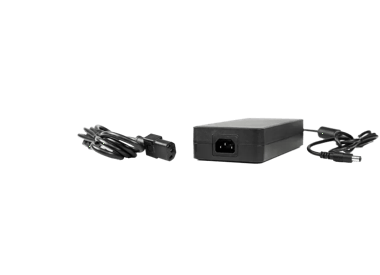
Fuente de alimentación externa de 90 W (EPS90W)
Fuente de alimentación externa de 90W, 54V a 1,66A, 110-240V, 50/60 Hz
90W External Power Supply (EPS90W)
90W External Power Supply, 54V @ 1.66A, 110-240V, 50/60Hz
Externe Stromversorgung, 90 W (EPS90W)
Externes 90 Watt Netzteil, 54V@ 1,66A, 110-240V, 50/60 Hz
Alimentation externe 90 W (EPS90W)
Alimentation externe 90 W, 54 V 1,66A, 110 V, 50 Hz
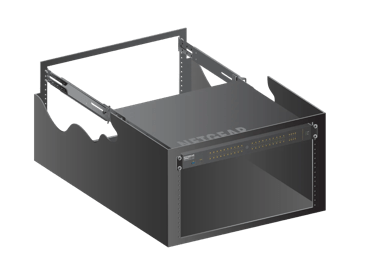

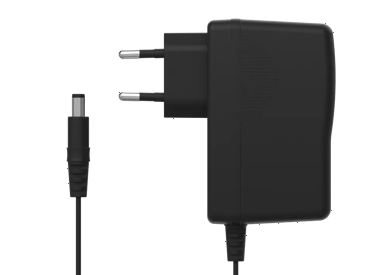
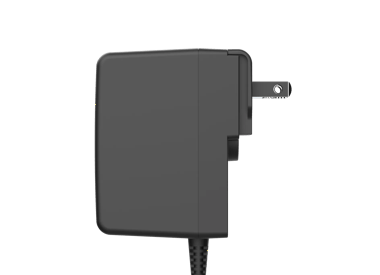
2.5Amp Power Adaptor (PAV12V25)
2.5Amp Power Adapter for NETGEAR Business WiFi Access Points
90W External Power Supply (EPS90W)
90W External Power Supply, 54V @ 1.66A, 110-240V, 50/60Hz
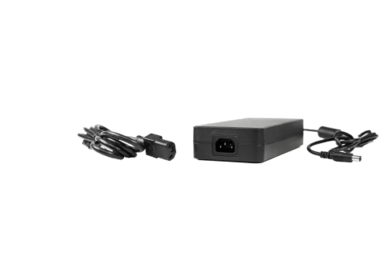
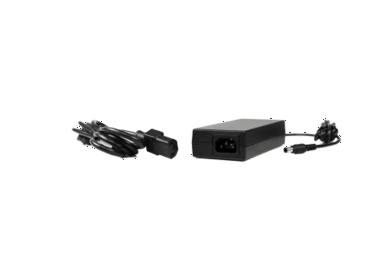

SFP+ Transceiver 10GBASE-T (AXM765)
SFP+ Transceiver, converts SFP+ ports to copper 10GBase-T up to 80 metres
Showing 1-12 of 34
FAQs
In general, SFP modules are designed to be interchangeable across different switches because they follow a multi-source agreement (MSA) that standardizes their physical size, connectors, and signaling. However, we recommend using only NETGEAR modules to ensure optimal performance and full compatibility with all switch features. Our SFP modules are specifically designed and tested to work with our switches.
You must first determine the power consumption of each component. This information is typically found on the device's label or in its technical specifications. Start by finding the power consumption of the switch itself, usually measured in watts. Next, add the power requirements for all connected devices.
If you are using a Power over Ethernet (PoE) switch, remember that the switch has a PoE power budget. Make sure that the combined power draw of all your connected PoE devices does not exceed this budget.
For a PoE switch, use Category 5e (Cat5e) cables or better. We recommend using Cat6 or Cat6a cables. They have larger conductors that help dissipate heat and have lower resistance, which is important for power delivery. Use 100% pure copper cables, as they have better electrical properties than cheaper copper-clad aluminum (CCA) alternatives. This is especially important for high-power PoE applications, like those in the IEEE 802.3bt standard, which require cables that can handle higher current. For longer distances or in environments with a lot of interference, shielded cables are often the better choice.
A backup power module isn’t required for all setups, but it's highly recommended for business-critical networks. If your switch supports redundant PSUs, adding a second power module helps keep it running if the primary unit fails. This is especially important in environments that demand high uptime, such as offices, data centers, or AV-over-IP deployments. It also allows hot-swapping during maintenance.
Access point power supplies are a practical solution for powering certain access points directly from mains power. They are especially useful in situations where Power over Ethernet (PoE) is unavailable, inconvenient, or unsuitable due to infrastructure limitations. By providing a reliable power source, these supplies ensure your access points remain functional and deliver consistent network performance, even in challenging setups.