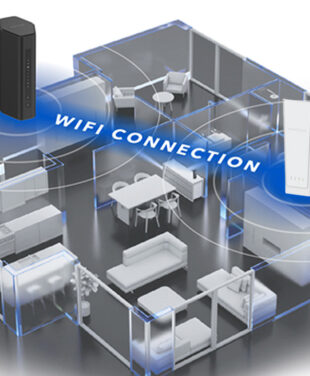
If you are asking “what is WiFi 8?”, it refers to the upcoming IEEE 802.11bn standard. While early discussions around WiFi 8 vs WiFi 7 often focus on raw bandwidth, WiFi 8 prioritizes Ultra-High Reliability rather than only increasing speed.
While many users look for a WiFi 8 release date, the standard is still actively under development. Although a WiFi 8 router isn’t available to buy today, this educational resource from NETGEAR WiFi 8 Insights breaks down what users can expect from the next generation of wireless networking.
IN THIS ARTICLE
- What Is IEEE 802.11bn and How Does WiFi 8 Work?
- What Are the Key Features of WiFi 8?
- What Is the Difference Between WiFi 8 vs WiFi 7?
- When Will WiFi 8 Be Available?
- Should You Wait for WiFi 8 or Upgrade to WiFi 7?
- How WiFi 8 Could Improve Future Connected Homes
- Frequently Asked Questions About WiFi 8
What Is IEEE 802.11bn and How Does WiFi 8 Work?
IEEE 802.11bn is the technical foundation behind what is WiFi 8 and how it will work. The standard’s core objective is Ultra-High Reliability (UHR).
Building on the evolution of WiFi technology, WiFi 8 aims to improve wireless consistency and network efficiency. When considering a future WiFi 8 router, the focus shifts from theoretical peak speed to steady, dependable performance across all devices.
As NETGEAR WiFi 8 research shows, understanding how the standard evolves helps clarify the practical differences between WiFi 8 vs WiFi 7.
What Are the Key Features of WiFi 8?
The technical improvements in WiFi 8 move away from relying solely on theoretical top speeds. Key features expected in a WiFi 8 router setup include:
- Multi-AP coordination: Multiple access points work together to create a seamless network experience.
- Improved edge-of-coverage performance: Connections remain strong and usable even at the furthest boundaries of your network.
- Better spectrum efficiency: The network manages available wireless bands much more effectively.
- Improved roaming performance: Transitioning from one access point to another while retaining signal connectivity.
- Better coexistence in crowded environments: Performance is unaffected by dense wireless interference.
These attributes will be standard on future hardware as the technical specifications move closer to the WiFi 8 release date.

What Is the Difference Between WiFi 8 vs WiFi 7?
Comparing WiFi 8 vs WiFi 7 highlights a fundamental shift in design philosophy. While WiFi 7 introduced Extreme High Throughput (EHT) and massive raw throughput, NETGEAR WiFi 8 analysis emphasizes reliable connection management over raw speed alone.
When evaluating WiFi 8 vs WiFi 7, WiFi 7 is the current standard, while WiFi 8 represents the future of network stability.
When Will WiFi 8 Be Available?
Many consumers are eager to know the exact WiFi 8 release date. The IEEE 802.11bn standard is currently in active development, so no official WiFi 8 release date has been announced.
Standards development requires significant time for technical specifications, testing, and industry consensus. You can check updates on WiFi 8 availability as development progresses.
Should You Wait for WiFi 8 or Upgrade to WiFi 7?
It would be better not to wait years to use a WiFi 8 router, but to assess one’s network needs right now. WiFi 7 is the latest generation that is currently in use, and it gives amazing performance for connected homes nowadays.
If you need upgraded hardware now, exploring WiFi 7 benefits is the best path forward. To decide whether to wait for WiFi 8, consider whether your current network meets your performance needs today.
How WiFi 8 Could Improve Future Connected Homes
Future connected homes will benefit significantly from NETGEAR WiFi 8 innovations once the standard is finalized.
More Reliable Connections
Ultra-High Reliability has been given the utmost importance in WiFi 8 in order to maintain stability in your network despite being very busy. The reason for choosing a constant speed over a varying one is that the latter can often create problems such as buffering and lagging.
Better Performance at Network Edges
In the past, devices that are situated farther away from a router experienced weak signals and poor connectivity. With WiFi 8, the issue of connectivity at the end of the line is improved.
Even when using your devices in a garage, on a backyard patio, or in a room far away from the main source of access, the connectivity will be stronger than ever.
Improved Smart Home Connectivity
Modern homes are filled with connected devices, from smart thermostats and security cameras to automated lighting. WiFi 8 features better spectrum efficiency and coexistence in crowded wireless environments. This lets the network manage dozens of background smart home devices without letting them interfere with high-bandwidth activities like 4K video streaming.
Better Multi-Device Experiences
Through multi-AP cooperation, there is effective coordination among various access points in the house. Whenever there are many people connected to the Internet in your family, the network will divide the work in an effective way. There will be no effect on the movie watching of one individual because of someone downloading a large file.
Frequently Asked Questions About WiFi 8
What is WiFi 8?
If you wonder "what is WiFi 8?", it is the consumer name for the upcoming IEEE 802.11bn wireless standard, which prioritizes Ultra-High Reliability over peak speeds.
When will WiFi 8 be released?
There is no official WiFi 8 release date yet because the IEEE 802.11bn standard remains under active development.
Is WiFi 8 faster than WiFi 7?
When comparing WiFi 8 vs WiFi 7, WiFi 8 does not focus solely on theoretical maximum speeds; instead, it aims to improve overall connection consistency and reliability.
What is IEEE 802.11bn?
To clarify "what is WiFi 8" from an engineering perspective, IEEE 802.11bn is the official technical specification name for the standard that will become WiFi 8.
Should I wait for WiFi 8?
Evaluate your current networking needs today. If you need better performance now, WiFi 7 is currently available, while WiFi 8 hardware remains several years away.
Will current devices support WiFi 8?
Because the standard is still in development, current devices are built for older standards. Future hardware updates will be required to fully use WiFi 8 capabilities.