
The National Atmospheric Research Laboratory built a high-availability, high-throughput research network with NETGEAR, enabling nonstop, petabyte-scale data processing through MLAG-based Active-Active connectivity.
NARL, a leading atmospheric research institute in India, required a high-performance, always-on network to handle massive volumes of scientific data. NETGEAR delivered an MLAG-based solution with true Active-Active connectivity and 200 Gbps throughput per node, eliminating downtime and multicast issues. The result is a fully resilient, future-ready network supporting uninterrupted 24/7 research.
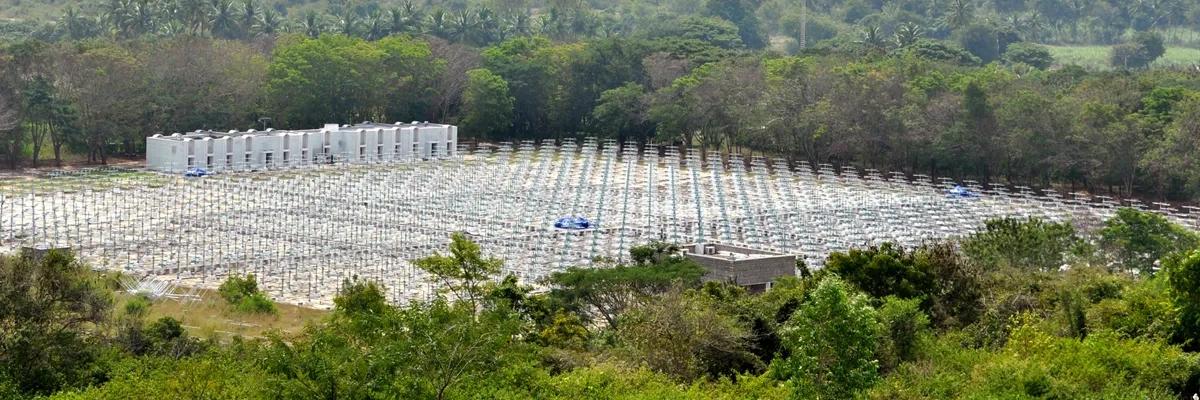

Company name: National Atmospheric Research Laboratory, Department of Space, Government of India
Industry: Scientific Research, Space
Company website: narl.gov.in
Location: Andhra Pradesh, India
Background
In the quiet hills of Gadanki, Andhra Pradesh, groundbreaking discoveries about Earth’s atmosphere are made every single day. The National Atmospheric Research Laboratory (NARL), a premier institution under the Department of Space, is home to some of India’s most advanced atmospheric radars, climate research systems, and high-performance computing environments. Behind every climate model, radar scan, and ionospheric reading lies one critical foundation: a network capable of moving data at extraordinary speed with absolute reliability. For NARL’s scientists, a moment of downtime can disrupt experiments, delay data capture, and compromise research integrity.
Challenge
As NARL’s scientific ambitions grew, so did the strain on its network infrastructure. Every day, petabytes of atmospheric and radar data need to be captured, transferred, and stored with absolute precision. The research teams depended on constant, high-speed access to this data. Any disruption, no matter how brief, could compromise ongoing experiments and delay critical observations. The existing design struggled to keep up with this demand, and it became clear that NARL required an entirely new foundation built for non-stop scientific operations.
NARL needed true Active-Active connectivity, a system where every storage path remained live, resilient, and load-balanced at all times. Complicating matters further, the team had previously encountered performance issues due to L2 multicast flooding, which created unpredictable traffic behavior across the network.
To support their high-performance storage systems, the new design had to deliver dual 100G uplinks, providing a full 200 Gbps of throughput to every storage node. This level of bandwidth was critical for handling concurrent writes, massive dataset transfers, and the continuous flow of sensor data.
Redundancy was equally vital. The network could not afford a single point of failure anywhere in the chain. Yet, NARL’s technical leadership quickly ruled out traditional stacking solutions. Stacking created a dependency on a single control plane and could not deliver the true Active-Active behavior they required. Any failure in the stack master would have risked bringing down the entire storage fabric, an unacceptable scenario for a 24/7 research organization.
“Our research environment operates around the clock, and our network infrastructure has to match that pace. With the volume of radar and atmospheric data we process, any instability can immediately impact our scientific output.”
Technical Director, National Atmospheric Research Laboratory
Solution
To meet NARL’s demanding performance and availability needs, NETGEAR designed a resilient network built on Multi-Chassis Link Aggregation (MLAG). This architecture gave NARL the true Active-Active storage connectivity they required, something traditional stacking could never reliably provide.
Each storage system was connected with dual 100G uplinks into two independent M4500-
CSM4532 switches, delivering a combined 200 Gbps of uninterrupted throughput. At the center of the design, the M4300-96X formed a highly available core, ensuring no single point of failure existed anywhere in the network.
The MLAG framework eliminated the multicast flooding challenges NARL had previously faced, bringing stable and predictable traffic behavior to their radar, sensor, and compute-intensive workflows. Surrounding this core, a robust mix of GSM4328S, GSM4352S, WAX610, and GS110TP devices completed the end-to-end solution.
The result was a clean, modern, and fully redundant architecture, one that keeps NARL’s research operations running seamlessly, even in the face of link or device failures.
“NETGEAR’s MLAG-based architecture has transformed our storage connectivity. The dual 100G links, seamless failover, and complete elimination of multicast flooding have significantly improved our operational stability.”
Technical Director, National Atmospheric Research Laboratory
Results
With NETGEAR’s MLAG-based solution in place, NARL successfully transformed its network into a highly available, high-throughput backbone built for scientific excellence. The new design delivered true Active-Active connectivity across the storage fabric, ensuring that data flowed continuously without interruption. Dual 100G links provided an impressive 200 Gbps of bandwidth to each storage system, allowing massive datasets from atmospheric sensors and radars to move effortlessly through the network.
One of the most significant improvements came from the complete elimination of multicast flooding. Traffic behavior became stable and predictable, enabling researchers to work with confidence even during peak scientific workloads. Just as importantly, the architecture removed every single point of failure, giving NARL a level of resilience that traditional stacking solutions simply could not match.
The network is now future-ready, capable of scaling alongside the growing demands of atmospheric research. With NETGEAR, NARL has gained a robust, modern infrastructure that supports continuous discovery, day and night, without compromise.
“NETGEAR provided not just hardware, but a solution architecture that aligned perfectly with our needs. Today, our network runs with greater efficiency, higher reliability, and the confidence that our research will continue without disruption.”
Technical Director, National Atmospheric Research Laboratory
Products Used
• NETGEAR M4500-32C (CSM4532) fully managed switches
• NETGEAR M4300-96X (XSM4396) fully managed switches
• NETGEAR M4300-28G (GSM4328S) fully managed switches
• NETGEAR M4300-52G (GSM4352S) fully managed switches
• NETGEAR WAX610 access points
• NETGEAR GS110TP smart switches (8-Port Gigabit PoE+ Smart Switch)
Why NETGEAR Was Chosen
• MLAG-enabled Active-Active support guaranteed uninterrupted connectivity, even during maintenance windows or unexpected device failures
• Complete elimination of L2 multicast flooding, ensuring data integrity and consistent performance
• Enterprise-grade capability at a cost-effective price point, delivering high-end performance without budget strain
• Proven track record of reliability in mission-critical environments that operate 24/7