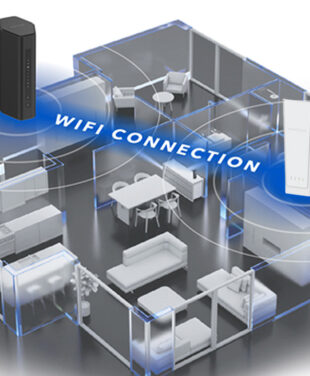
WiFi 8 represents a pivotal evolution in wireless networking for both consumers and businesses. NETGEAR is positioned to lead the transformation in bringing this next-generation connectivity to market, with an emphasis on reliability, advanced features, and readiness for future digital demands.
The Evolution of WiFi: From Speed to Reliability
WiFi innovations have historically focused on increasing speed, but WiFi 8 signals a critical shift toward Ultra-High Reliability (UHR) to meet modern digital needs. It focuses on maintaining uninterrupted, near-lossless wireless performance even in challenging or crowded environments. UHR supports demanding applications in smart homes, industry, and crowded buildings. WiFi 8’s evolution is defined by its advanced capabilities—here’s how its key features are shaping the future of wireless connectivity.
WiFi 8, the IEEE 802.11bn Standard
WiFi 8 (802.11bn) is the latest generation WiFi standard in development and overseen by the WiFi Alliance of which NETGEAR is a contributing member of [1](https://www.wi-fi.org/member-companies). Wifi 8 is being designed for ultra-reliable, adaptive wireless connections in hyper-connected environments. WiFi 8 maintains use of the 2.4, 5, and 6 GHz spectrum and up to 320 MHz channel bandwidth currently available on WiFi 7 devices.
It is still in early development with expected standard finalization and an estimated release date around 2029–2030. According to techradar.com, WiFi 8 won’t be faster, but it will be better. Although there are no base level technical speed increases anticipated for WiFi 8, the higher reliability means that average speeds and connections quality will improve, leading to better speed and quality.
Key Features Driving Ultra High Reliability in WiFi 8
There are a range of novel technical advancements that allow WiFi 8-enabled routers to offer Ultra High Reliability and seamless roaming for both homes and enterprises. The final WiFi 8 specifications are expected to include:
- Modulation and Coding Scheme (MCS) values that boost real-world transmission rates by 5–30%, supporting stable performance in adverse or crowded conditions.
- Key technologies such as…
- Coordinated Spatial Reuse (Co-SR) lets nearby Wi-Fi 8 devices and access points coordinate their channel use so they can transmit simultaneously with minimal interference.
- Dynamic Sub-Channel Operation – which can boost throughput by up to 80%.
- Distributed Resource Units (DRUs) lets WiFi 8 dynamically split and assign spectrum to multiple users at once for faster, more efficient data delivery.
- Enhanced Long Range (ELR) Read more more details on these technologies below.
- WiFi 8 is engineered for mission-critical environments like smart factories, hospitals, and multi-dwelling units where reliability and constant uptime matter most.

Integration of AI and Machine Learning in WiFi 8 Networks
WiFi 8 is expected to leverage AI and machine learning to dynamically optimize wireless network performance in real time. AI algorithms handle network management tasks like intelligent beam forming, dynamic channel selection, and load balancing to keep connections stable and responsive even as network demands change.
AI-powered network optimization automatically adjusts settings for optimal, WiFi performance, and reliability. Hardware enhancements, such as telemetry engines offer real-time network insights—allowing proactive adjustments and troubleshooting.
Jonathan Oakes, Senior VP & General Manager of Home Networking, NETGEAR, recently stated in fidelity.com, “The integration of AI into home networking is a game-changer that will help us to elevate the customer experience by delivering smarter, faster, and more immersive experiences.” *https://www.fidelity.com/news/article/technology/202510140301PRIMZONEFULLFEED9544869
Enhanced Spectrum Efficiency and Extended Range Capabilities
WiFi 8 is being designed to efficiently utilize the available WiFi spectrum, improving coverage and device coexistence for dense smart home or enterprise deployments. Enhanced spectral efficiency through technologies like Dynamic Sub-Channel Operation and Coordinated Access Points allows many more devices to operate smoothly on the same network.
Extended Long Range (ELR) capabilities address coverage gaps and ensure low-power, distant IoT devices remain reliably connected. The power efficiency improvements and sustained performance in large or multi-story spaces support seamless connectivity for a wide range of environments.
Low Latency and Performance Improvements for Real-Time Applications
Features such as deterministic wireless operation and ultra-low latency make WiFi 8 ideal for demanding real-time applications. Deterministic networking offers predictable, stable delivery of data packets with minimal and consistent delay, approaching the reliability of wired networks. This near-lossless, low-latency performance is essential for applications like cloud gaming, AR/VR, telemedicine, and industrial automation.
WiFi 8 Compatibility and Coexistence with Existing WiFi Technologies
WiFi 8 is being designed to work seamlessly alongside current devices and infrastructure. WiFi 8 will continue to operate on unlicensed 2.4, 5, and 6 GHz bands, ensuring backward compatibility with legacy WiFi 6 and WiFi 7 equipment. WiFi 8’s expected synergy and resource sharing with forthcoming 6G mobile technologies will form an integrated future wireless landscape. While existing devices will connect as usual, only new WiFi 8–certified devices will unlock the full user experience benefits.
WiFi 8 Release Timeline and Industry Readiness
The WiFi 8 feature-set was unveiled in 2025 with new chipsets announced at events like Network X, yet remains in early Research and Development (R&D). Independent tests, prototype successes, and data throughput demonstrations signal industry certification and consumer device availability around 2026–2030.
| Version | WiFi 7 | WiFi 8 |
| Standard | IEEE 802.11be | IEEE 802.11bn |
| Focus | Speed & Capacity | Intelligence & Reliability |
| Benefit | WiFi Performance | WiFi Reliability
|
| Launched | Summer 2023 | TBA 202x |
| Learn More | Stay Tuned! |
The Impact of WiFi 8 on Consumer and Business Connectivity
WiFi 8 is set to revolutionize the way consumers and businesses connect, delivering unparalleled reliability, smarter performance, and seamless adaptability. From enhancing everyday connectivity in smart homes to enabling mission-critical operations in industries, WiFi 8 introduces practical improvements that redefine both established and new use cases.
Consumer Benefits:
Consumers will notice lower latency and more stable streaming, gaming, and smart device performance, especially in crowded apartments or smart homes.
Business/Enterprise Benefits:
Business and industrial wireless technology benefits include support for mission-critical workflows in healthcare, manufacturing, and enterprise networking automation environments.

NETGEAR’s Vision: Leading the Future of Reliable, Intelligent WiFi
NETGEAR is the leading WiFi technology authority and early adopter driving the upcoming WiFi 8 revolution, underscoring the brand’s commitment to leadership and innovation. NETGEAR continues with its track record of a first-to-market approach and ongoing investment in developing WiFi 8–ready solutions.
NETGEAR’s current WiFi 7 solutions remain advanced, secure, and future-compatible, providing a clear upgrade path for early adopters as WiFi 8 becomes available. NETGEAR’s advanced home-networking features integrated into our current and future line-up include Advanced Router Protection, NETGEAR Armor smart protection for connected devices, family controls, and a commitment to both reliability and user simplicity.
We’re thrilled to lead the charge in shaping the future of WiFi, empowering you with cutting-edge technology, unmatched reliability, and seamless simplicity—because the best connections are just the beginning.
Frequently Asked Questions About WiFi 8
What distinguishes WiFi 8 from previous WiFi generations?
WiFi 8 stands out by focusing on ultra-high reliability and stable connections, rather than just higher speed, making it ideal for demanding smart home, business, and industrial environments.
When can consumers expect WiFi 8 products to become available?
Consumers can expect WiFi 8 products to begin arriving before the end of this decade, as the standard moves toward finalization and device manufacturers ramp up development.
Will WiFi 8 support existing WiFi devices?
Yes, WiFi 8 network are backwards compatible and will work with current WiFi devices, but only new WiFi 8–certified products will receive the full benefit of the new WiFi 8 ecosystem features.
How does WiFi 8 improve connectivity in crowded environments?
WiFi 8 is expected to include advanced features like Dynamic Sub-Channel Operation and Coordinated Access Points to boost performance and reduce interference, allowing more devices to operate smoothly even in congested spaces and high-density environments.
What applications benefit most from WiFi 8’s low latency and reliability?
Applications such as high-bandwidth online gaming, AR/VR, telemedicine, and real-time industrial automation benefit the most from WiFi 8’s low latency, fast data rates, and ultra-reliable connectivity.