Seamless Integration
The AV industry is rapidly evolving towards intelligent, connected environments, with data and AI driving this transformation. By 2027, AV systems won’t just connect; they’ll adapt, evolve, and drive measurable business outcomes. More and more, organizations expect platforms that unify data, devices, and cloud-first architecture to power real-time action and insight across every space.
AV is becoming increasingly embedded in the workplace and experiential design, moving beyond its traditional support role. At the center of this transformation is a fundamental shift in how the industry thinks about AV architecture. Rather than treating audio, video, control, and data as siloed systems, leading platforms now offer unified, cloud-native approaches. The lines between AV, IT, and building management systems are increasingly blurred, making an integrated approach critical, as it enables much greater efficiency and innovation as experiences become more connected.
AI-Driven Automation at Scale
The acceleration of AI and automation stands out as the most exciting trend. We’ve seen a greater emphasis on AI and data-driven automation across AV solutions, with the convergence of AV and IT evolving into full integration with building systems.
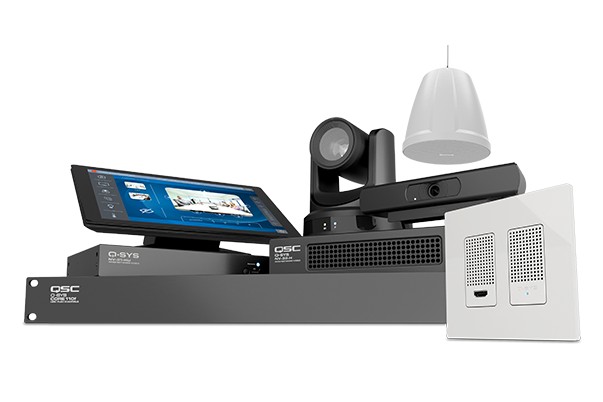
Solutions like Q-SYS VisionSuite exemplify this evolution by using real-time audio and computer vision analysis to enable intelligent, context-aware automation in high-impact spaces. With AI-powered Presenter Spotlight and Speaker Spotlight technologies, VisionSuite delivers full-body presenter tracking and dynamic active-speaker framing that adapts naturally to movement and conversation—without rigid presets or manual intervention. By leveraging vision- and audio-driven triggers through the Q-SYS Control engine, the system can automatically adjust lighting, activate displays, and frame speakers in real time, creating a more engaging and inclusive experience for both in-room and remote participants.
Behind the scenes, modern cloud infrastructure paves the way for future capabilities, including AI-driven recommendations and deeper automation intelligence.
Platform Scalability and Cloud Management
These AI-driven capabilities only deliver value when they can be deployed consistently across entire organizations. As organizations deploy AV across hundreds or thousands of rooms, scalability becomes paramount. Modern platforms are designed with this in mind. Organizations can start small, deploying in a single room, and scale up without costly “rip and replace” cycles.
That is now made easier through cloud-based remote monitoring and management solutions like Q-SYS Reflect, an intrinsic part of the Q-SYS Full Stack AV Platform. Q-SYS Reflect delivers real-time visibility into the health and performance of every connected system—including Q-SYS and supported third-party devices—helping ensure maximum uptime and operational efficiency. It also enables remote access for configuration and adjustments, firmware updates, file management, and system optimization, while extending AV system data to existing IT and building management platforms through the Q-SYS Reflect API for consolidated insight and control across the infrastructure.
Data-Driven Decision Making
There’s a growing focus on scalable platforms that deliver measurable outcomes. Organizations want systems that demonstrate clear business value through actionable data. Modern platforms can analyze AV reliability, track system health, and visualize trends across deployments. Space utilization insights using existing device sensors and calendar data help organizations make smarter technology and investment decisions.
With fewer subsystems to oversee, reduced integration complexity, and built-in future-proof scalability, the cost-to-value ratio improves. But realizing this value requires new approaches from integrators.
Skills for the Modern Integrator
The modern integrator must move beyond traditional installation work and develop the ability to design, operate, and scale digital workplace systems. Success now depends on mastering low-code and no-code platforms, API-driven automation, and cloud-based monitoring so teams can deploy consistent experiences at scale with less complexity. As workflows become more software-defined, integrators need enough scripting, data, and system orchestration literacy to connect devices, sensors, and applications into cohesive workplace logic—not just room-level behaviors.
To deliver enterprise-grade outcomes, integrators must also build fluency across adjacent domains, including IT, workplace experience platforms, access control, calendaring, mapping, and environmental systems. This cross-discipline understanding allows them to participate in the broader digital workplace ecosystem and support AI-driven capabilities that rely on clean, structured data from the edge. In parallel, soft skills like change management, user education, and consultative communication are becoming essential as customers increasingly expect guidance on governance, standards, and long-term roadmaps.
Manufacturers and integrators who embrace this platform-first mindset—treating AV as part of a unified, flexible, and data-rich enterprise stack—will lead the next era. Those who remain tethered to isolated, hardware-centric approaches will struggle to compete as organizations shift toward intelligent spaces that demand interoperability, automation, and continuous adaptation.
About the author
Nathan Glotfelty is Senior Director of Corporate Development & Alliances at QSC, where he leads strategic partnerships with global technology leaders to expand the Q-SYS ecosystem. With a background spanning workplace innovation and systems integration, Nathan focuses on enabling full-stack AV platforms, cloud-native architecture, and AI-driven automation that transform how organizations deploy intelligent, scalable solutions across high-impact spaces.
More information
Visit our website to see the AV Solutions.
Discover everything you need to know about AVoIP and building an AV network.
Get free support for your AV project from our senior AV engineers.