Define a Replacement Strategy
A solid plan prevents surprises. Some approaches:
- Time-based: Replace modules after a fixed period, for example, 5 years.
- Usage-based: Replace after a certain number of operating hours (some switches log this).
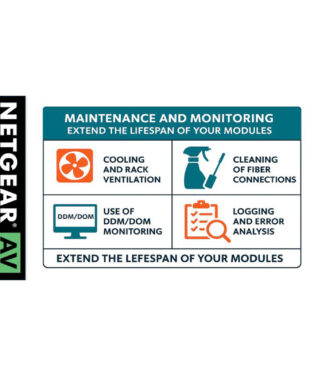
- Performance-based: Replace as soon as DDM values (such as TX power or temperature) consistently fall outside the margins.
For critical links, a proactive approach is essential—better to replace before failure than during an outage.
Keep a Spare Stock
Always have a few identical spare modules on hand:
- For quick replacement in case of failure
- For planned replacement during maintenance
- For testing during troubleshooting
Order extra units from the same batch during installation—this ensures compatibility and reliable performance.
Document and Plan Rotation
Clear management supports lifecycle control:
- Record installation dates and locations for each module
- Track which modules are in critical positions
- Consider rotation: move older modules from critical to less critical positions
This spreads out wear and tear and extends the usability of your hardware.
Invest in Quality
Cheap modules can work fine, but:
- Often have less reliable lasers
- Wear out faster under heavy use
- Offer fewer monitoring options
For backbone links and AV matrix connections, it pays to choose NETGEAR quality or well-tested third-party modules.
Choose Modules with Headroom
Don’t run components at their limit:
- Select modules that can handle more than strictly required
- For example: use a module rated for 1 km on a 400 m link
- Or choose an industrial-grade module if the environment is hot or dusty
This margin provides a buffer for natural degradation—and prevents operating “on the edge”.
Conclusion
Replacing fiber modules isn’t a matter of “only when it breaks.” In AV over IP networks, reliability is crucial—and that requires planning, monitoring, and strategic management. By replacing modules on time, keeping spares, and choosing quality, you prevent downtime and keep your network stable.
In the next blog, we’ll wrap up the series with an overview of best practices and a summary of key insights.